When Does Your Pet Need Surgery? Signs Explained
When does a pet need surgery? It can feel worrying when your cat or dog is in pain or behaving differently. Some procedures are planned, such as neutering, while others may be recommended to treat an injury, remove a growth, correct a physical problem or relieve discomfort that cannot be managed effectively in another way.
However, symptoms alone cannot confirm that an operation is needed. The right treatment depends on a thorough veterinary examination and, where appropriate, diagnostic tests. Early assessment helps your veterinary team understand the problem and discuss suitable options with you.
Signs Your Pet May Need Veterinary Assessment
Changes in movement, comfort or behaviour
Pain is not always obvious. Pets may limp, move stiffly, avoid stairs or jumping, become reluctant to play, or react when a particular area is touched. You might also notice restlessness, difficulty getting comfortable, hiding, unusual vocalisation or a change in temperament. Cats can be particularly subtle, so a small departure from their normal routine may be significant. These signs do not necessarily mean surgery is required, but they do deserve veterinary attention.
Changes in eating, digestion or toileting
A reduced appetite, repeated vomiting, difficulty passing urine or stools, a swollen abdomen, or ongoing changes in toileting habits can indicate many different conditions. Some can be treated medically, while others may require a surgical procedure. Wounds that are deep, contaminated, bleeding or not healing should also be assessed. Contact your veterinary team promptly if your pet collapses, has difficulty breathing, experiences a serious injury or appears to be in severe pain.
Conditions That May Require Pet Surgery
Surgery may be recommended when it offers the safest or most effective way to treat a diagnosed condition, prevent complications or improve quality of life. Common examples include:
- Broken bones, damaged ligaments and certain joint problems
- Swallowed objects or intestinal blockages
- Wounds, abscesses or traumatic injuries requiring repair
- Tumours, lumps or abnormal tissue requiring removal or biopsy
- Dental disease requiring extractions or oral surgery
- Bladder stones and some urinary conditions
- Spinal or neurological conditions causing pain, weakness or loss of mobility
- Planned procedures such as neutering
Not every pet with these conditions will need an operation. Your vet will consider the diagnosis, severity, available alternatives and your pet’s age, health and individual needs before making a recommendation.
How a Vet Decides Whether Surgery Is Needed
A consultation usually begins with a discussion about what you have noticed, when the changes began and whether they are becoming more pronounced. A physical examination helps the vet assess pain, movement, hydration, circulation and the area of concern. Blood tests, digital X-rays, ultrasound or other investigations may then be recommended to reach an accurate diagnosis and evaluate your pet’s overall health.
If surgery is advised, your vet should explain why, what the procedure involves, the expected benefits and risks, possible alternatives, and the likely recovery. This is also your opportunity to ask questions. At German Veterinary Clinic, we believe owners should feel informed and included throughout their pet’s care.
What to Expect From Veterinary Surgery
Before and during the procedure
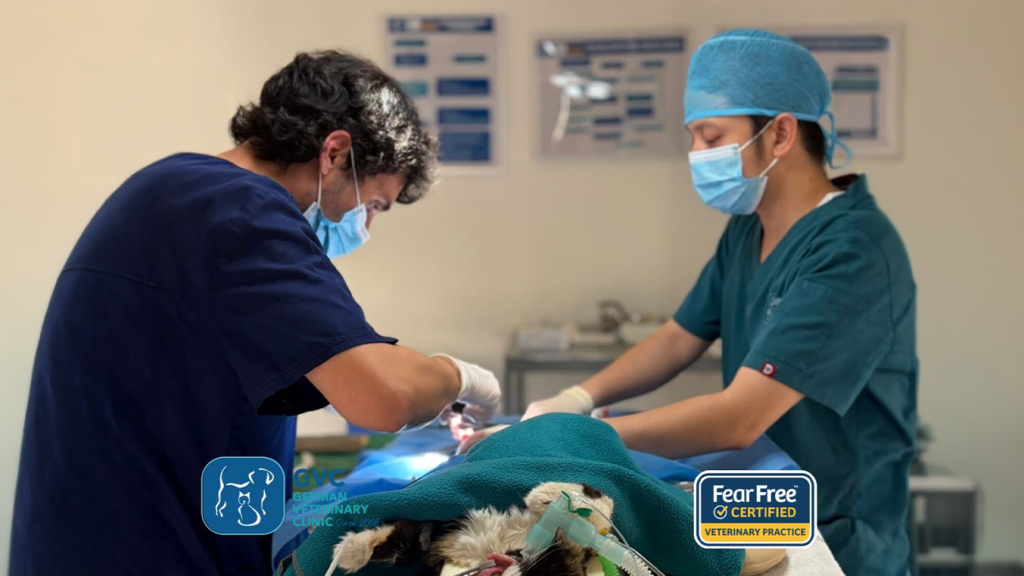
Every operation begins with careful planning. Pre-anaesthetic checks help the team tailor the anaesthesia plan to your pet’s medical history, age, breed and individual needs. During the procedure, experienced veterinary nurses continuously monitor vital signs including heart rate, oxygen levels, blood pressure and temperature.
Our approach to veterinary surgery combines clinical expertise with Fear Free care. Gentle handling, a calm environment and thoughtful preparation help reduce fear, anxiety and stress. Pain management is planned before, during and after surgery as part of our Zero Pain philosophy.
Recovery and aftercare
Recovery varies according to the procedure and your pet’s health. Before your pet goes home, the team will explain medication, feeding, activity restrictions, wound care and follow-up appointments. A quiet, clean resting place with food, water and toileting facilities within easy reach can help make recovery more comfortable.
Monitor your pet closely and contact the clinic if you are concerned about pain, appetite, behaviour, medication or the surgical site. Never give human painkillers or change prescribed medication unless your vet advises you to do so. Good communication between you and the clinical team is an important part of a smooth recovery.
Conclusion
Knowing when a pet needs surgery begins with noticing changes and arranging a veterinary assessment, not trying to diagnose the problem at home. Surgery is only one possible treatment, and the decision should be based on careful examination, appropriate diagnostics and a personalised discussion of benefits, risks and alternatives.
If something about your pet does not feel right, please contact German Veterinary Clinic. Our team can assess them carefully, answer your questions and help you feel confident about the next step.